





Titanium & Refractory Metals
Refractory Metals & Special Alloys
Custom Refractory Metals, Special Alloys and Extreme-Condition Components
MH manufactures refractory metal and special alloy products for buyers who need more than standard material supply. We support tantalum, niobium, zirconium, titanium, hafnium, rhenium, vanadium, tungsten, molybdenum and nickel-based alloy projects, including foils, capillary tubes, targets, formed parts and precision machined components.
0.005% OxygenLow oxygen control for key niobium alloys such as C-103 and Nb521. |
0.005mm FoilUltra-thin refractory metal foil rolling with custom width slitting. |
680mm WidthWide foil and sheet processing for special metal projects. |
D 0.98 * T 0.10mmNb-Ti superconducting capillary tube production capability. |
Tooling FormingComplex thin-wall parts beyond normal machining limits. |
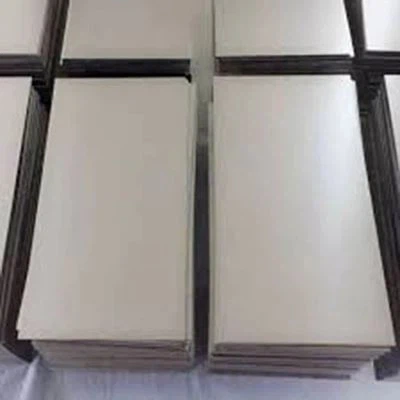
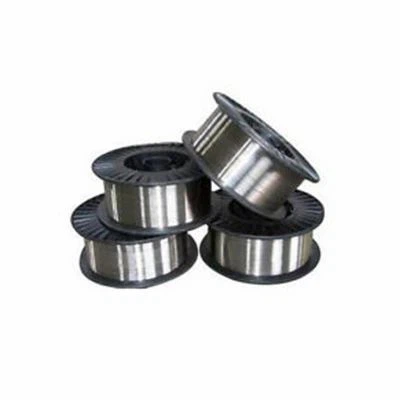
Built for Buyers Who Need a Manufacturing Route, Not Only a Material NameMany refractory metal projects fail because the material is difficult to form, the machining window is narrow, or the required thickness, wall size, oxygen level or surface condition is outside normal catalog supply. MH helps purchasing engineers and R&D teams evaluate the material, production route and inspection requirements before production. The product photos below represent part of the available product range. For drawing-based components, special alloy grades or non-standard dimensions, send the material, drawing, tolerance, quantity and application for engineering review. |
|


MH: Professional Refractory Metals Supplier
XAC MH MACHINING CO., LTD. , established in 1955, is a leading backbone enterprise within China's aerospace industry. The company has successfully developed China's first aviation gyroscopic instrument, its first missile autopilot system, its first aviation attitude and navigation system, and its first aviation flight director system. OEM ultra-precision machining for Medical, Energy, Space, Defense, Semiconductor, Oil & Gas etc.
Why Choose Us
Advanced Equipment
We are equipped with hundreds of world-leading manufacture and testing equipment from Germany, Switzerland, the United States, and Japan, like six-axis, five-axis, and four-axis CNC machines, sets of Zeiss CMM, high-precision testing benches etc.
ODM/OEM Services
From refractory metal materials to precision functional components and radar system products, we accept ODM/OEM orders. We provide a one-stop service from design to processing to surface treatment.
Quality Certifications
MH is certified by international standards including AS9100, ISO14001, and ISO45001, and possesses a CNAS-accredited laboratory and a comprehensive quality control system.
Global Market
Our products are exported to countries and regions including Europe, the United States, Russia, and Japan. Our products enjoy an excellent reputation among our customers.
Types of Refractory Metals
The Refractory Metals Produced by Our Company Mainly Include the Following Types:
Niobium
Niobium Alloy C-103 (Nb-10Hf-1Ti-0.7Zr) is a high-performance niobium-based alloy widely used in aerospace, propulsion systems, high-temperature structures, and advanced manufacturing.
01
Niobium-titanium Capillary
Niobium–Titanium (Nb-Ti) capillary tubes are precision thin-wall tubes manufactured from Nb-Ti alloy, widely used in superconducting systems, cryogenic equipment, medical devices, and high-reliability scientific instruments.
02
Tantalum Capillary Tube
MH high-purity tantalum (Ta) capillary tubes are precision-engineered for extreme environments, offering exceptional corrosion resistance, high-temperature stability, and superior ductility.
03
Tantalum Foil / Strip
Tantalum Foil / Strip is produced from high-purity tantalum in accordance with ASTM B708, offering exceptional ductility, outstanding corrosion resistance, and excellent chemical stability.
04
Tantalum Rod / Bar Specification
|
Item |
Specification |
|
Material Standard |
ASTM B365 |
|
Grade |
Ta1 (R05200), Ta2 (R05400) |
|
Purity |
≥99.95% |
|
Diameter Range |
5 – 200 mm |
|
Length |
Customized |
|
Supply Condition |
Forged or annealed |
|
Surface Finish |
Turned, ground, or machined |
Advantages of Tantalum Rod / Bar

Corrosion Resistance
Tantalum is a corrosion-resistant, high-melting-point, high-density metal. It has excellent corrosion resistance and has good resistance to corrosive media such as strong acid and strong alkali.

High Melting Point
Tantalum has a very high melting point, approximately 3017 degrees Celsius (5463 degrees Fahrenheit). This enables tantalum to maintain stability in high-temperature environments, making it suitable for applications in high-temperature processes and special environments.

Thermal Conductivity
Tantalum has good thermal conductivity, which makes tantalum rods useful in some applications that require high thermal conductivity, such as heat-conducting components in semiconductor manufacturing.

Mechanical Properties
Tantalum rods have moderate mechanical properties that can be tailored to the requirements of a specific application with appropriate processing and handling. This makes it very useful in manufacturing various industrial parts.
Application of Tantalum Rod / Bar
Electronic field:
Tantalum capacitors made of tantalum rods have the advantages of small size, large capacity, and good stability and are widely used in computers, mobile phones, and other communication equipment.
Chemical field:
Can be used to manufacture chemical equipment in the reactor, heat exchanger, pipeline, valve,s and other componentsimprovingve the operating efficiency and service life of equipment.
Aerospace:
This an be used to manufacture combustion chambers, turbine blades, nozzles, and other high-temperature components of aircraft engines to ensure the normal operation of the engine.
Medical Devices:
Tantalum is used in medical implants due to its biocompatibility and resistance to corrosion in the human body.
Tantalum Rod & Bars Mechanical Properties
|
Grade |
Density |
Melting Point |
Tensile Strength |
Yield Strength (0.2%Offset) |
Elongation |
|
Tantalum |
16.6 g/cc |
3290 K, 2996°C, 5462°F |
285 M Pa (41 ksi) |
170 M Pa (25 ksi) |
30% |
Niobium Rod / Bar Specification
|
Standard |
ASTM B392-98 |
|
Shape |
Rod |
|
Grade |
R04200, R04210, R04251, R04261 |
|
Pure Niobium |
Nb ≥ 99.9%, 99.95% available |
|
Dimensions |
Dia.: 0.125"- 2.50" (3.18 mm - 63.5 mm) Or customized |
|
Ultimate Tensile Strength |
≥18,000 psi (≥125 MPa) |
|
Yield Strength (0.2% offset) |
≥10,500 psi (≥73 MPa) |
|
Elongation |
25% |
|
Niobium Alloys |
Nb-1Zr, Nb-5Zr, Nb-10Zr, C-103, Nb-521, Cb-752 |
Features of Niobium Rod / Bar
Corrosion Resistance: Niobium rods demonstrate outstanding resistance to corrosion, even in highly aggressive chemical environments.
High Strength and Ductility: Despite being a refractory metal, niobium exhibits impressive ductility, allowing it to be drawn into fine wires or formed into complex shapes without fracturing.
Superconductivity: One of the most technologically significant properties of niobium is its superconducting behavior at low temperatures.
High Melting Point: This thermal resilience enables niobium rods to retain structural integrity and mechanical strength in high-heat environments where most metals would melt or weaken.
Biocompatibility: Niobium is highly biocompatible, making it an excellent candidate for medical implants and surgical instruments.
Thermal and Electrical Conductivity: In addition to superconductivity, niobium possesses good thermal and electrical conductivity in its normal (non-superconducting) state.

Raw material preparation: Preparation of niobium alloy billets by powder metallurgy method.
Strip processing: After obtaining niobium alloy billets, further processing is carried out using high-temperature sintering method.
Refining and Purification: Sintering in high vacuum to achieve metal densification and purification.
Forming and processing: After refining, niobium billets are processed through processes such as plastic deformation, cutting, welding, heat treatment, and coating to ultimately form niobium rods.
Quality Inspection and Packaging: After passing the inspection, proceed with packaging and prepare for leaving the factory.
Custom Solutions
We offer custom tantalum solutions, including:
Please provide drawings or detailed specifications for evaluation.
Non-standard dimensions
01
Tight tolerance control
02
Special surface finishes
03
Application-specific technical requirements
04
Quality Control
The following provides a detailed overview of the rigorous testing procedures we employ:
Visual Inspection
Surface Examination: A thorough visual inspection is carried out to identify any surface defects such as scratches, dents, or other irregularities.
Dimensional Accuracy: All key dimensional parameters of the rods, including diameter, length, and thickness, are carefully checked to ensure they meet specified tolerance requirements.
Mechanical Testing
Tensile Strength Test: The mechanical strength of niobium rods is evaluated through tensile testing to determine key properties such as tensile strength, yield strength, and elongation.
Hardness Test: Various hardness tests, including Rockwell or Vickers methods, are performed to measure the material’s resistance to indentation and wear.
Chemical Analysis
Composition Verification: The chemical composition is accurately verified using advanced techniques such as X-ray fluorescence (XRF) or optical emission spectrometry (OES).
Non-Destructive Testing (NDT)
Ultrasonic Testing: Ultrasonic inspection is conducted to detect internal defects or structural inconsistencies within the rods.
Radiographic Inspection: X-ray or gamma-ray testing is used to examine the internal structure and identify any hidden defects.
Corrosion Resistance Assessment
Immersion Test: The rods are immersed in a highly corrosive chemical solution to evaluate their corrosion resistance over time.
Intergranular Corrosion Test: A specialized test is performed to assess the material’s susceptibility to intergranular corrosion.
Certification and Documentation
After all tests are successfully completed, each batch of rods is certified and accompanied by a detailed inspection report. The report outlines all tests performed and their results, ensuring full transparency and quality assurance.
Manufacturing Capability
From Ingot to Foil, Tube, Target, Formed Part and Machined Component
For refractory metals and special alloys, the manufacturing route matters as much as the material grade. MH supports projects from raw material and ingot preparation through forging, rolling, vacuum annealing, drawing, slitting, tooling-assisted forming, machining and inspection.
|
Ingot, Forging and Stock PreparationUse this image position for ingot, forging, raw material or production-line photos. The text explains material control before rolling, drawing or machining. |
Foil Rolling, Annealing and SlittingUse this image position for rolling, vacuum annealing, pickling, drying, straightening or slitting photos. It supports the 0.005mm foil and 680mm width capability. |
Tooling, Forming and Complex PartsUse this image position for tooling, formed niobium parts, nickel cathode/anode forming examples or difficult thin-wall structures that cannot be made by machining alone. |


Capability Pages for High-Intent Buyer Searches
These manufacturing capabilities help buyers judge whether MH can support a non-standard material form, part geometry or application condition before sending a drawing.
Ultra-Thin Refractory Metal FoilsUltra-thin titanium, niobium, tantalum and molybdenum foils, with thickness capability down to 0.005mm and wide foil/sheet capability up to 680mm. Cold rolling / vacuum annealing / pickling / straightening / custom width slitting |
Precision Capillary TubesThin-wall capillary tubes for superconducting, cryogenic, medical, chemical and precision assembly applications, including Nb-Ti capillary tube production capability of D 0.98 * T 0.10mm. Nb-Ti / tantalum / niobium / titanium capillary tubes |
Custom Formed Parts & ToolingMH can evaluate complex thin-wall, cup-shaped, shell, ring, channel and special-profile parts, then develop tooling and forming routes when conventional machining is not enough. Tooling design / trial forming / dimensional correction / forming + machining |
Sputtering Targets and Furnace ComponentsTarget and high-temperature component programs can involve tantalum, niobium, tungsten, molybdenum, zirconium, titanium, vanadium, nickel and other special alloys. Ta / Nb / W / Mo / Zr / Ti / V / Ni targets, hot-zone parts, crucibles, boats and shields |
Materials and Product Forms We Can Evaluate
The product list above shows representative products. MH can also evaluate drawing-based requirements across a broader material portfolio, including refractory metals, active metals and high-temperature special alloys.
Core Refractory MetalsTantalum, niobium, tungsten, molybdenum, hafnium, rhenium and vanadium products. |
Special Metal SystemsZirconium, titanium, high-purity titanium, Zr-2, Zr-4, Ti-6Al-7Nb and related alloy grades. |
Nickel-Based AlloysHastelloy, Inconel, Monel and CuNi alloy capillary tube or wire requirements. |
Product FormsFoil, strip, sheet, plate, rod, bar, wire, tube, pipe, capillary, target, formed part and machined part. |
Application Areas
Refractory metals and special alloys are usually selected when temperature, corrosion, vacuum, electrical performance, purity or dimensional stability creates a difficult manufacturing problem.
|
Aerospace & Propulsion
C-103, Nb521, niobium alloys, thermal structures and lightweight high-temperature components. |
Superconducting & Cryogenic
Nb-Ti capillary tubes, superconducting niobium and precision thin-wall tube programs. |
Chemical Processing
Tantalum, zirconium, titanium and nickel alloy parts for aggressive media and corrosion resistance. |
|
Semiconductor & Sputtering
Ta, Nb, W, Mo, Zr, Ti, V and nickel-related sputtering target projects. |
Vacuum Furnace & Hot Zone
Tungsten, molybdenum, tantalum and niobium furnace components, boats, shields and supports. |
Medical & Scientific Instruments
Small-diameter tubes, precision assemblies, corrosion-resistant components and custom material parts. |
Related Published Product Pages
These pages are live product examples under the refractory metal category. They help buyers review more specific niobium and tantalum grades, forms and applications.
Shipping and Delivery

Our Certifications
Our manufacturing and quality systems meet strict aerospace standards


FAQ for Refractory Metal and Special Alloy Projects
These questions help purchasing engineers prepare a faster and more accurate inquiry.
Can MH manufacture non-standard refractory metal parts from drawings?
Yes. MH can review 2D drawings, 3D files, material grades, tolerance requirements, quantities and application conditions to evaluate whether the part should be rolled, drawn, formed, machined or produced by a combined process route.
What information should we send for quotation?
Please send the material grade, product form, drawing or sketch, key dimensions, tolerances, surface condition, quantity, application environment and any inspection or certification requirements.
Can machining solve all refractory metal component requirements?
Not always. Many refractory metals have a narrow machining window, and thin-wall, deep, curved, shell or cup-shaped structures may need tooling-assisted forming before final machining or trimming.
Can MH support both prototype and batch production?
MH can evaluate prototype, small batch and repeat production requirements. For tooling-formed parts, the manufacturing plan depends on material, thickness, forming depth, bend radius, tolerance and expected quantity.
Send Your Refractory Metal Drawing or Material Requirement
If your project involves tantalum, niobium, tungsten, molybdenum, zirconium, titanium, hafnium, rhenium, vanadium or special alloy parts, send your drawing, material grade, dimensions, quantity and application. MH will help review the material and manufacturing route.
As one of the most professional refractory metals manufacturers and suppliers in China, we're featured by quality products and good price. Please rest assured to wholesale high quality refractory metals made in China here from our factory.