





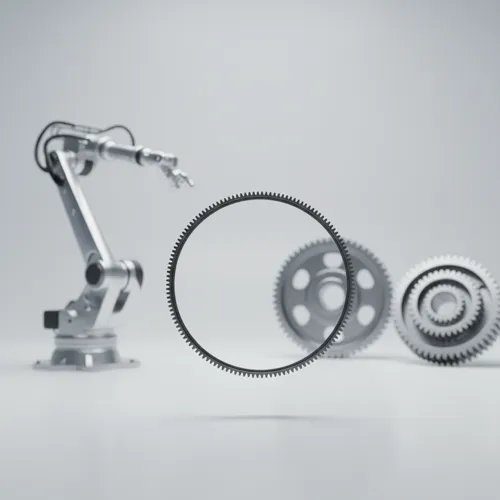
Custom Ring Gears for Planetary Gearboxes, Robotic Actuators & Compact Transmission Modules
A ring gear is the outer toothed component in a planetary gear system. Unlike a sun gear, which transfers motion from the center, the ring gear defines the outer meshing boundary and strongly influences the stability, compactness, load sharing, and overall performance of the planetary gearbox.
For robotic actuators, compact reducers, aerospace mechanisms, and precision automation systems, the ring gear is not simply a "housing with teeth." It is a critical transmission component that must combine accurate internal tooth geometry, stable concentricity, reliable material performance, and excellent dimensional control.
MH manufacture custom precision ring gears for demanding applications where compact structure, smooth meshing, and long-term reliability are essential.
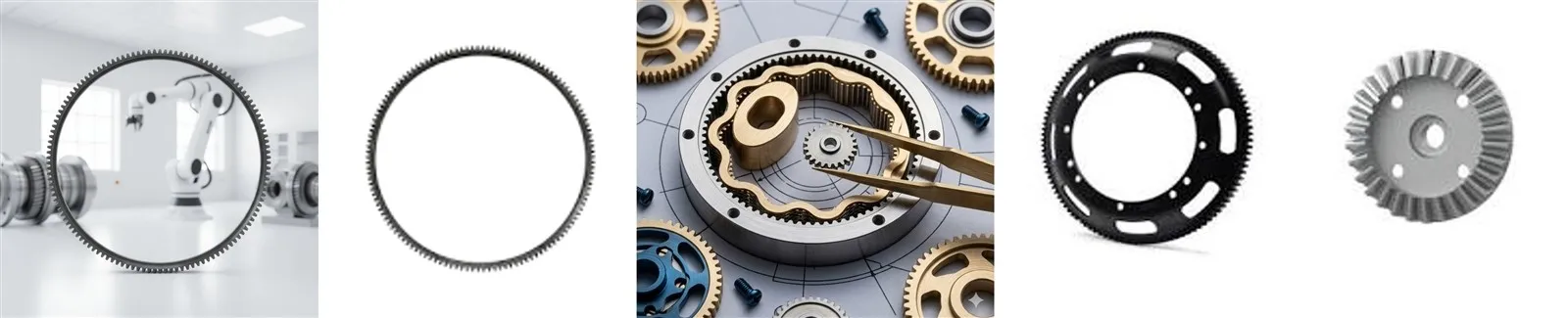
What Makes a Ring Gear Critical?
In a planetary gearbox, the ring gear supports internal meshing with multiple planet gears. This means its geometry directly affects:
- Planet gear alignment
- Load distribution
- Gearbox noise
- Backlash consistency
- Transmission efficiency
- Service life of the full gear set
If the ring gear has poor roundness, inaccurate internal teeth, or unstable heat treatment deformation, the entire planetary system may suffer from uneven load sharing, vibration, noise, and premature wear.
That is why precision ring gear manufacturing requires more than standard gear cutting. It requires careful control of internal gear geometry, datum alignment, material stability, and inspection strategy.
Key Advantages of MH Ring Gears
Internal Tooth Precision
Ring gears usually require accurate internal gear teeth. MH control tooth profile, pitch consistency, and meshing behavior according to the actual gearbox design.
This helps improve:
- Smooth planet gear engagement
- Lower transmission fluctuation
- Better torque transfer
- More stable reducer performance
Stable Concentricity & Roundness
For compact planetary systems, ring gear concentricity directly affects meshing quality. MH focus on:
- Bore-to-tooth alignment
- Outer diameter stability
- Roundness control
- Datum consistency
This is especially important for robotic actuators and servo reducers where small errors can create vibration or backlash variation.
Suitable for Compact Gearbox Structures
MH ring gears can be customized for:
- Thin-wall structures
- Integrated housings
- Internal gear rings
- Lightweight transmission modules
- Small-module planetary reducers
This makes them suitable for modern actuator designs where space and weight are highly constrained.
Heat Treatment & Deformation Control
For hardened ring gears, heat treatment can affect circularity and tooth accuracy. MH evaluate material, geometry, and process route to reduce deformation risk and maintain stable post-treatment dimensions.
Typical Applications
Robot Actuator Gearboxes
Ring gears are used in compact robotic drive modules, including:
- Humanoid robot actuators
- Robot finger drive systems
- Wrist and elbow joint reducers
- Compact servo gearbox assemblies
Planetary Reducers
Suitable for:
- Miniature planetary gearboxes
- Precision reducers
- High torque density transmission units
- Small-module gear sets
Aerospace Motion Systems
Used in:
- Lightweight actuation mechanisms
- Precision positioning systems
- Compact mechanical transmission assemblies
Industrial Automation
Applied in:
- Servo drive units
- Smart manufacturing equipment
- Precision rotary modules
- Automated positioning systems
Manufacturing Capabilities
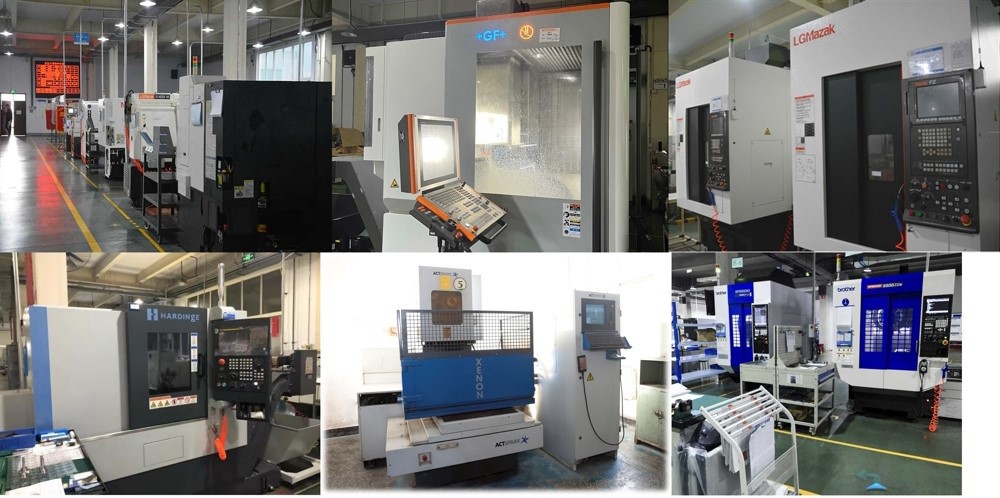
MH provide custom ring gear manufacturing based on drawings, samples, or gearbox design requirements.
Typical capabilities include:
- Internal gear machining
- Gear shaping
- Gear hobbing where applicable
- CNC turning and milling
- 5-axis machining for complex features
- Heat treatment and hardening
- Precision inspection
MH can support:
- Small-module internal gears
- Thin-wall ring gear structures
- Integrated ring gear housings
- Prototype and small-batch production
- Long-term repeat manufacturing
Engineering Considerations for Ring Gear Design
When developing a custom ring gear, the following design points are especially important:
1. Internal Gear Tooth Accuracy
Internal tooth geometry must match the planet gear set precisely. Even small pitch or profile errors may affect load sharing.
2. Wall Thickness Stability
Thin-wall ring gears can deform during machining or heat treatment. Proper process planning is required.
3. Mounting Interface
Mounting holes, grooves, steps, or integrated housing features must be controlled relative to the internal gear teeth.
4. Backlash Control
Backlash is determined by the whole planetary system, but ring gear accuracy is one of the key contributors.
5. Inspection Method
Ring gears often require careful inspection of internal teeth, runout, roundness, and datum relationships.
Aerospace-Origin Quality Control
MH aerospace manufacturing background gives us strong discipline in process planning, dimensional inspection, and consistency control.
Quality control may include:
Incoming material verification
Tooth geometry inspection
Runout and concentricity measurement
Hardness testing after heat treatment
Surface finish inspection
Batch consistency control
SPC process control when required
For high-reliability applications, MH can align inspection items with customer drawings and project requirements.

Why Choose MH for Custom Ring Gears?
- Experience in precision small-module gear manufacturing
- Ability to support internal gear and integrated ring structures
- Aerospace-origin process discipline
- Prototype-to-production manufacturing support
- Strong quality control and inspection capability
- Engineering review before quotation
- Flexible customization based on drawings
MH is especially suitable for customers who need more than a standard catalog gear and require a manufacturing partner capable of supporting demanding gear geometry and application-specific requirements.
Custom Ring Gear Development
MH support custom ring gear projects from early design review to production supply.
You can send us:
- 2D drawings
- 3D models
- Gearbox structure requirements
- Material specifications
- Target precision grade
- Heat treatment requirements
- Prototype or production quantity
Our engineering team can review manufacturability, recommend a suitable process route, and provide quotation support.

FAQ
What is a ring gear used for?
A ring gear is commonly used as the internal outer gear in planetary gear systems. It meshes with planet gears and helps define the torque transmission, reduction ratio, and structural stability of the gearbox.
Can ring gears be customized?
Yes. We manufacture custom ring gears based on drawings, samples, or application requirements. Internal teeth, outside profile, bore, holes, grooves, and integrated housing features can be customized.
Can you manufacture small-module ring gears?
Yes. We support small-module precision gear manufacturing for compact planetary gearboxes, robotic actuators, and precision motion systems.
What materials are available?
Common materials include alloy steel, stainless steel, titanium alloy, and hardened carburized steel. Material selection depends on strength, weight, corrosion resistance, and operating environment.
Do you support prototype ring gears?
Yes. We can support prototype, small-batch, and long-term production projects.
Request a Custom Quote
Looking for custom ring gears for planetary gearboxes, robotic actuators, or precision transmission systems?
Send us your drawings, material requirements, precision targets, and expected quantity. Our engineering team can review your project and recommend a suitable manufacturing solution.
Contact Us
Hot Tags: Planetary Gears Ring Gear for Robot, China Planetary Gears Ring Gear for Robot manufacturers, suppliers, factory, 0 2m Micro Spur Pinion Gear, 0 3m Micro Spur Gear, 0 8m Small Module Precision Compact Worm Shaft, m0 2 Ultra Small Module Spur Pinion Slender Shaft, micro gears, Module m1 Precision Small Module Worm Shaft


