




Thin Wall Machining | 316L Pharmaceutical Equipment Component | No-Weld Custom Machined Part
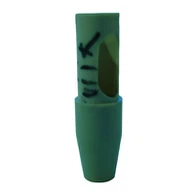
Thin-walled Rubber Plug Rod
The Thin-walled Rubber Plug Rod is a precision 316L stainless steel component used in sterile pharmaceutical equipment, especially rubber stopper handling, positioning or insertion-related mechanisms in filling and packaging systems. It is not a simple pin or welded rod assembly. The key manufacturing difficulty is the combination of a high length-to-diameter ratio rod, a thin-wall structure, small internal hole features and strict burr-free surface requirements for pharmaceutical equipment.
For buyers, the important question is not only whether the supplier can machine stainless steel. The real question is whether the supplier can machine a long slender internal hole and high length-to-diameter ratio geometry while keeping wall thickness, straightness, concentricity, smooth surface, clean edges and stable assembly dimensions under control. MH manufactures drawing-based 316L precision parts for pharmaceutical and high-reliability equipment, with process planning for thin wall machining, long hole machining, inspection and surface finishing.
316L Stainless SteelSuitable for pharmaceutical equipment parts requiring corrosion resistance and cleanable surfaces. |
Thin Wall MachiningProcess control for thin-wall deformation, vibration, burrs and dimensional stability. |
High L/D RatioHigh length-to-diameter ratio geometry makes straightness, vibration and hole deviation difficult to control. |
No-Weld StructureDrawing-based precision machining avoids weld joint risk when the design requires an integral part. |
What Is A Thin-walled Rubber Plug Rod?
In pharmaceutical filling and packaging equipment, rubber stoppers or rubber plugs must be transferred, positioned and inserted reliably without contamination, particle generation or unstable movement. A rubber plug rod is a precision metal component used in this handling or insertion area. It may contact the plug, guide the plug, support positioning or become part of a moving mechanism in an aseptic equipment module.
The product on this page is a custom 316L stainless steel Thin-walled Rubber Plug Rod. Based on the drawing and sample, the part includes a base feature and slender rod features with small-diameter internal machining. The part is supplied according to customer drawing, not as a catalog standard item. The manufacturing focus is thin-wall control, long-hole machining, straightness, surface finish and burr-free pharmaceutical equipment quality.
Quick Technical Information |
|
| Product Name | Thin-walled Rubber Plug Rod / 316L rubber stopper rod / pharmaceutical plug rod |
| Material | 316L stainless steel, or equivalent material confirmed by customer drawing and purchase specification |
| Application | Sterile pharmaceutical equipment, rubber stopper handling, aseptic filling equipment, packaging machinery, laboratory or precision equipment modules |
| Manufacturing Type | No-weld drawing-based precision machined component; thin-wall and long-hole machining are the key processes |
| Difficult Features | High length-to-diameter ratio rod geometry, long slender hole, thin wall, small diameter features, rod straightness, concentricity, deburring, smooth surface and stable mounting dimensions |
| Surface Options | Machined finish, polished finish, passivated finish or electropolished finish available upon drawing and application review |
| Inspection Focus | Critical dimensions, internal hole condition, wall thickness risk, perpendicularity, straightness, burrs, surface defects, mounting fit and material certificate |
|
|
|
|

Why This Part Is Difficult To Machine
Many suppliers can turn simple stainless steel pins. This part is different. The rod has a high length-to-diameter ratio, so it behaves like a slender flexible feature during machining. Even small cutting force or clamping force can cause bending, runout, vibration or dimensional drift. At the same time, the thin-wall rod and long slender hole create a narrow machining window. Tool runout, heat, chip removal, tool wear or poor clamping can cause wall thickness variation, ovality, internal scratches, burrs or hole deviation. For pharmaceutical equipment, these defects are not only dimensional issues. They can also become cleaning risks, particle risks or assembly instability risks.
High Length-To-Diameter RatioWhen the rod is much longer than its diameter, machining becomes sensitive to bending, vibration, tool runout and straightness error. |
Thin-Wall Deformation ControlThin walls can deform during machining, polishing or inspection. Clamping and tool pressure must be controlled to avoid dents and ovality. |
Burr-Free Internal EdgesInternal burrs are hard to see but critical for sterile equipment. MH focuses on deburring, edge finishing and inspection of small features. |
No-Weld Integral MachiningThe part is not a welded assembly. No-weld machining reduces weld seam risks but makes machining route and dimensional control more demanding. |
MH Manufacturing Route
MH manufactures drawing-based precision components for demanding equipment. For the Thin-walled Rubber Plug Rod, our process planning focuses on long-hole machining, thin-wall protection, stable rod geometry, clean surfaces and inspection points that match the final equipment use.
1. Drawing ReviewIdentify high length-to-diameter ratio areas, thin-wall zones, long-hole features, mounting faces, critical edges and inspection datums. |
2. Material ControlUse 316L stainless steel or customer-specified material with material certificate when required. |
3. Precision MachiningControl turning, milling, drilling, reaming and long-hole machining route for stable geometry. |
4. Surface FinishingDeburring, polishing, passivation or electropolishing can be selected according to equipment requirements. |
5. InspectionCheck dimensions, hole quality, perpendicularity, surface defects, burr risk and packing protection. |
|
|
|
|

Why 316L Is Used For Pharmaceutical Equipment Parts
316L stainless steel is widely used in pharmaceutical, medical, food and clean equipment because it offers corrosion resistance, low carbon content for better weld-zone corrosion resistance in welded applications, and good compatibility with polishing, passivation and electropolishing processes. Even when the part itself is not welded, 316L is still commonly selected for clean equipment because it can support smooth, corrosion-resistant and cleanable surfaces.
For a rubber plug rod used in sterile pharmaceutical equipment, material and surface condition matter because the part may operate near product-contact or sterile handling areas. Burrs, scratches, crevices, poor polishing or trapped residue can affect cleaning, sterilization and long-term reliability. This is why MH treats surface finishing and inspection as part of the manufacturing process, not as an afterthought.
Quality Control For Pharmaceutical Equipment Components
Dimensional InspectionCritical rod diameters, hole positions, base dimensions, perpendicularity, straightness and mounting fit are checked by drawing. |
Burr And Surface ControlExternal and internal edges are inspected for burrs, scratches, dents, sharp edges and surface defects that may affect clean equipment use. |
Documentation And PackingMaterial certificate, dimensional report, surface requirement and protected packing can be supplied according to purchase order. |
Typical Applications
Aseptic Filling EquipmentRubber stopper handling, positioning and insertion-related components in sterile filling systems. |
Pharmaceutical Packaging MachineryCustom 316L stainless steel parts used in stopper feeding, guiding, positioning and transfer modules. |
Clean Equipment ComponentsPrecision machined stainless parts requiring smooth surfaces, burr-free edges and cleanable geometry. |
Laboratory EquipmentSmall precision stainless steel rods, holders, guides and plug-contact components made by drawing. |
Thin Wall Machining ProjectsCustom parts where thin walls, deep holes, small features and deformation control are the main challenge. |
Custom OEM ComponentsDrawing-based stainless steel parts for equipment manufacturers needing stable repeat production. |
What To Send For A Quotation
To quote a Thin-walled Rubber Plug Rod accurately, please send the 2D drawing, 3D model if available, material requirement, quantity, tolerance table, surface roughness requirement, passivation or electropolishing requirement, burr control requirement, inspection report requirement and packing requirement. If the part has a high length-to-diameter ratio area or long internal hole, please mark the critical functional surfaces and straightness/concentricity requirements. If the part is used in a sterile area, please also tell us the cleaning, sterilization and product-contact expectations.
Related search terms naturally covered by this page include Thin-walled Rubber Plug Rod, 316L rubber stopper rod, pharmaceutical equipment component, thin wall machining, high length-to-diameter ratio machining, long hole machining, deep hole machining stainless steel, aseptic filling machine parts, stopper insertion rod and custom pharmaceutical machinery parts.
FAQ
Is this part welded?
No. This Thin-walled Rubber Plug Rod is positioned as a no-weld precision machined component. The manufacturing difficulty is the thin wall and long slender hole, not welding.
Why is long-hole machining important?
A long small hole is difficult to keep straight, clean and burr-free, especially when the surrounding rod has a high length-to-diameter ratio. Poor hole quality can affect assembly, cleaning, strength and repeatable equipment motion.
Can the part be passivated or electropolished?
Yes, polishing, passivation or electropolishing can be evaluated according to the drawing, surface roughness requirement, cleanability requirement and final equipment use.
Can MH make other thin-wall pharmaceutical equipment parts?
Yes. MH can evaluate custom 316L stainless steel parts, thin-wall machined parts, long-hole parts, precision rods, guides, holders and drawing-based pharmaceutical equipment components.
Request A Quote For Thin-walled Rubber Plug Rods
If you need 316L Thin-walled Rubber Plug Rods, sterile rubber stopper rods or custom thin wall machined components for pharmaceutical equipment, send us your drawing and application requirements. MH can review the machining route, inspection points, surface finishing options and delivery plan.
Contact MH For Custom Machined PartsHot Tags: thin-walled rubber plug rod, China thin-walled rubber plug rod manufacturers, suppliers, factory, Thin Wall Precision Bridge, thin wall machining, Thin walled Pulse Shield, Thin walled Machining, Thin Walled Steering Control Cover, Thin walled Rubber Plug Rod