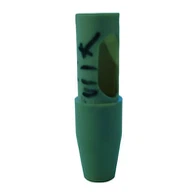





HYLX115-1 Filter Element for Aviation Lubrication Systems
HYLX115-1 is a cylindrical lubricating-oil filter element for systems using 4050, 4106 or 4109 aviation lubricants. It combines a 15 μm main filter rating and a 40 μm auxiliary filter rating in a lightweight element weighing no more than 250 g. It is intended for removal of solid contaminants from lubricating oil.
For aviation lubrication-system manufacturers and equipment integrators, selecting this element means matching more than a micron value: the filter must fit the housing, seal correctly and meet the oil-flow pressure-drop budget throughout the specified operating conditions.

HYLX115-1 product appearance: cylindrical filtration section with end fittings. Confirm the installation configuration against the agreed drawing.
Model Specifications
| Model | HYLX115-1 |
|---|---|
| Working medium | 4050, 4106 and 4109 aviation lubricating oils |
| Filtration ratings | Main filter: 15 μm; auxiliary filter: 40 μm |
| Medium temperature | -40 to +180 °C; long-term temperature: 130 °C |
| Working pressure | 0.9 MPa; maximum: 1.5 MPa |
| Flow resistance | ≤55 kPa at 2,000 L/h (approximately 33.3 L/min) |
| Weight | ≤250 g |
The long-term temperature condition is 130 °C. For operation elsewhere within the stated temperature range, define the temperature profile and exposure duration during application review. The maximum working-pressure value is not an element collapse-pressure rating.
Installation Envelope and Housing Compatibility

HYLX115-1 outline: 131.40 mm overall length and Ø50.40 mm maximum indicated diameter. Other end features are shown in the drawing; production and installation acceptance follow the agreed dimensional specification.
Use the outline to assess the available space, then check the locating diameters, end-face seating, sealing arrangement and retention method. Also establish the flow direction and how the main and auxiliary filtering sections connect to the surrounding circuit. Their different micron ratings alone do not define the circuit routing.
For an existing housing, MH can review the mating drawing and the required filtration duty together. For a new design, the element, housing interface and verification requirements can be developed as one engineering scope. Supply can cover the filter element independently; housing or accessory requirements should be identified separately.
Three Checks Before Selecting This Element
1. Match oil flow to temperature and viscosity
The specified flow-resistance point is ≤55 kPa at 2,000 L/h. To apply it to a system, establish the oil grade, oil temperature or viscosity, and pressure-measurement boundaries. Cold-start and stabilized operating conditions should be reviewed separately because oil viscosity affects pressure drop. Agree the required test conditions for your application.
2. Separate line pressure from differential pressure
System working pressure describes the pressure environment. Differential pressure is the pressure difference across the filtering section. Define the permitted clean-element pressure drop, the loaded-element limit and any associated bypass or differential-pressure indication separately; these values cannot be derived from the 1.5 MPa maximum working pressure.
3. Specify filtration performance and acceptance
The 15 μm and 40 μm values identify the main and auxiliary filtration ratings. For a specified capture efficiency, beta ratio or cleanliness target, include the required test method and acceptance criteria in the procurement specification. Micron ratings alone do not establish those results.
Engineering, Manufacturing and Production Control
MH provides filter-element design, precision manufacturing, assembly and verification for aviation fluid systems, supported by more than 20 years of OEM experience in aviation valve components and filter elements. The manufacturing scope is organized around the agreed oil compatibility, geometry and functional acceptance requirements.

Precision machining capability supports end fittings, locating features and mating components. Dimensions and surface requirements are controlled to the product drawing.

Manufacturing, inspection and assembly activities support coordinated production of high-reliability components. Machining, process review and inspection support production to the agreed component specifications.

Workshop organization and segregated material staging support orderly production. Product identification and inspection records can be defined as part of the delivery requirements.
Verification Matched to the Filter Duty
A useful acceptance plan connects each check to a requirement. MH can support the following inspections and tests as specified for the project; the equipment shown supports a requirement-based inspection and verification plan.

Element integrity: evaluate integrity using the agreed method and limits, with the element construction and test-fluid compatibility taken into account.

Flow resistance: measure pressure drop at the agreed flow, oil grade and temperature or viscosity. Identify whether the test covers the element or the complete assembly.

Oil cleanliness: particle counting supports fluid cleanliness assessment. Filtration-efficiency claims require the appropriate upstream/downstream method and defined conditions.

Dimensional inspection: verify drawing-defined locating dimensions and mating geometry. Dimensional inspection is separate from hydraulic performance testing.

Temperature exposure: evaluate temperature-related requirements against the agreed profile. Chamber exposure alone does not demonstrate hot-oil flow performance.

Oil-system sealing: evaluate specified sealing requirements using the agreed medium, temperature and pressure conditions.
Model Supply or Custom Filter Development
For HYLX115-1 procurement, start with the model number, oil grade, quantity and installation requirements. For a custom element, MH can work from a drawing or develop the design from the installation envelope and functional requirements, then manufacture and verify against the agreed specification.
| Application and fluid | Oil grade, equipment function and expected contamination conditions |
|---|---|
| Thermal and pressure duty | Start-up and continuous oil temperatures, duration of temperature extremes, working pressure and pressure transients |
| Flow and filtration | Normal and peak flow, allowable pressure drop, main/auxiliary filtration requirements and any efficiency target |
| Installation and acceptance | Housing interface or envelope, flow direction, sealing and retention requirements, test conditions and required documentation |
You can begin with the model number and available operating conditions; a complete internal design is not required to start the technical discussion.
Related Aviation Filtration Products
For other oil duties, compare the 25 μm precision lubricating-oil filter element. Browse lubricating-oil filter elements for other element types, or lubricating-oil filter assemblies when a housing is also required. Products are not interchangeable solely because their oil grades or micron ratings overlap.
HYLX115-1 Questions
Can the element operate continuously at 180 °C?
The long-term temperature condition is 130 °C. A requirement involving 180 °C should include exposure duration and the complete operating profile for engineering review; it is not a stated continuous-duty rating.
Does 15/40 μm mean two filters connected in series?
It identifies the main and auxiliary filter ratings. The flow routing and connection of those sections must follow the element configuration and system design, rather than being inferred from the ratings.
Is an existing filter housing enough to develop an element?
The housing interface is a starting point. Oil compatibility, flow and pressure-drop requirements, filtration performance, temperature duty, seals and acceptance tests must also be defined. MH can support this development without a supplied internal element drawing.
Discuss Your Aviation Oil-Filter Requirement
Send HYLX115-1, your oil grade, operating conditions and quantity, together with any available installation drawing. MH can review model suitability or a custom filter-element requirement.
Hot Tags: HYLX115-1 Aviation Lubricating Oil Filter Element, 15/40 Micron, China HYLX115-1 Aviation Lubricating Oil Filter Element, 15/40 Micron manufacturers, suppliers, factory, Oil Filter For Aviation Lubricants, Precision Oil Filter Element For Aviation Lubricants, lubricating oil filter element, HP 8B Oil Filter Element For Precision Filtration, 380 m Lubricating Oil Filter Element, Oil Filter Element For 4050 4106 And 4010 Lubricants